Native Plants to Strengthen the Fall Garden
September 14, 2026
Pennsylvania native plants can give a garden something to hold on to when summer’s flowers start packing their bags. As blooms fade, seed heads, grasses, berries, changing foliage, and sturdy stems step forward to keep the landscape interesting, layered, and alive. Plants adapted to local conditions also bring more dependable performance with less fuss once plants are established. Fall is when these garden workhorses show what they can do.
Why Native Plants Earn Their Place in the Fall Garden
A garden can look spectacular in July and August, then suddenly seem like someone turned down the volume in September. Flowers disappear, foliage starts changing, and a few tired-looking stems remain standing. Native plants can help extend a garden’s beauty by offering characteristics that remain useful long after flowers have finished.
Plants native to Pennsylvania have evolved alongside the region’s climate, soils, weather patterns, and wildlife. That doesn’t mean every native plant will thrive in every Glenside yard, but a well-matched selection can be remarkably dependable. Once established, many develop substantial root systems that help them tolerate periods of heat, dry weather, and other challenges common to southeastern Pennsylvania.
Look Beyond Blooms for Fall Interest
Fall gardening benefits from a change in perspective. Instead of asking which plants are still flowering, start noticing which plants are still doing something. Many native perennials continue to offer beauty throughout their life cycle, long after their flowers have faded.
- Silhouettes: A fading perennial with a strong silhouette is often just as beautiful as one covered in flowers.
- Seed heads are particularly valuable for adding visual texture. Coneflowers, asters, and grasses can develop interesting forms as their blooms fade, creating little architectural sculptures throughout the garden. Upright stems provide height, while fluffy grasses sway in the breeze and add movement when much of the garden begins to settle down.
- Changing foliage brings another layer of color. Some shrubs develop brilliant autumn tones, while others contribute berries or persistent leaves. Even stems themselves can become part of the composition, giving beds vertical lines and contrast against lower-growing plants, pathways, walls, and lawns.
This is where native plants for fall really earn their reputation. They don’t need to be flowering nonstop to remain useful. A plant can contribute shape, texture, movement, color, wildlife value, or winter interest—and suddenly that supposedly “finished” garden has plenty left to say.
 Pennsylvania Native Plants That Shine in Fall
 Pennsylvania Native Plants That Shine in Fall
Native perennials and grasses can also pair beautifully with fall container plants, creating a natural transition between seasonal pots and the surrounding landscape.
Asters are excellent late-season performers, producing clouds of flowers when many summer perennials are winding down. Depending on the species, mature plants can range from roughly 1 to 5 feet tall, making them useful in perennial borders, pollinator gardens, and naturalistic plantings.
Goldenrod brings brilliant yellow flowers to the late-summer and fall garden and pairs beautifully with purple asters. They work well in the middle or back of a perennial border where their upright stems can provide a strong burst of late-season color.
Switchgrass is a standout native grass for structure and movement. Growing about 3 to 6 feet tall depending on the cultivar, it can tolerate a range of soil conditions, including periods of dryness once established. Its upright form and seed heads remain attractive into winter, making it useful as a backdrop, screen, or repeated planting through a larger bed.
Little bluestem offers a more compact option, typically reaching around 2 to 4 feet tall. It offers warm bronze, copper, and reddish tones as autumn progresses. Plant it along borders, slopes, or in groups where its fine texture can contrast with broader-leaved perennials.
Oakleaf hydrangea is a native shrub that delivers multiple seasons of interest, commonly reaching 4 to 8 feet tall and wide, depending on the cultivar. Its large leaves develop rich fall color, while its exfoliating bark and dried flower heads continue to bring beauty after the growing season.
Winterberry is another useful native shrub, particularly where fall and winter berries are desired. Female plants produce the familiar bright berries when a compatible male plant is nearby, making winterberry a striking choice for wetter areas, shrub borders, and wildlife-focused landscapes.
Native coneflowers, including purple coneflower, offer flowers through summer and develop distinctive seed heads that remain attractive into fall. Their upright form makes them easy to tuck among grasses, asters, and other late-season perennials.
Design Techniques for a Vibrant Fall Garden
 Design Techniques for a Vibrant Fall Garden
A few design considerations go a long way in creating a pleasing and vibrant fall garden:
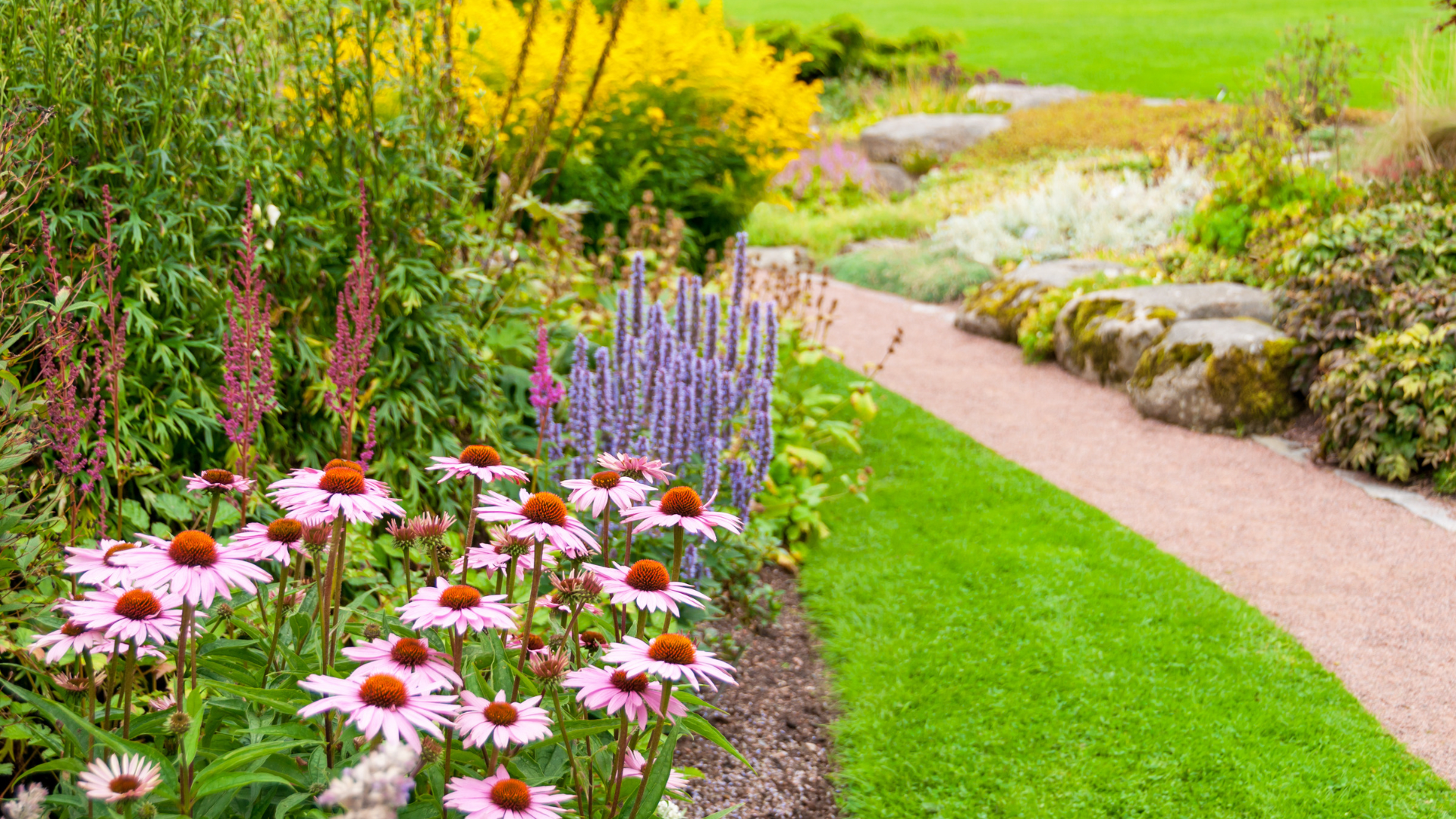
- Layers: Think of the garden as a layered painting, with tall grasses and shrubs creating the background, mid-height perennials filling the middle, and shorter plants anchoring the edges. For example, switchgrass can provide height behind coneflowers and asters, while little bluestem creates a lower layer near a path. Oakleaf hydrangea can anchor one end of a bed, while winterberry provides another strong vertical element.
- Repetition is another useful design principle. Repeated groups of plants throughout a bed create color echo, design connectivity, and offer more value to wildlife.
- Visual Contrast: Pair plants with contrasting textures, forms, and colors to make each layer of the garden stand out. For example, combine fine-textured grasses with broad-leaved shrubs or bold seed heads with airy perennials to create a fall garden that feels dynamic rather than flat.
Let Seed Heads and Stems Stay a Little Longer
 Let Seed Heads and Stems Stay a Little Longer
Fall cleanup can be tempting. When the leaves are falling and everything looks tired, suddenly the pruners seem to be calling your name—but resist the urge to cut everything down immediately.
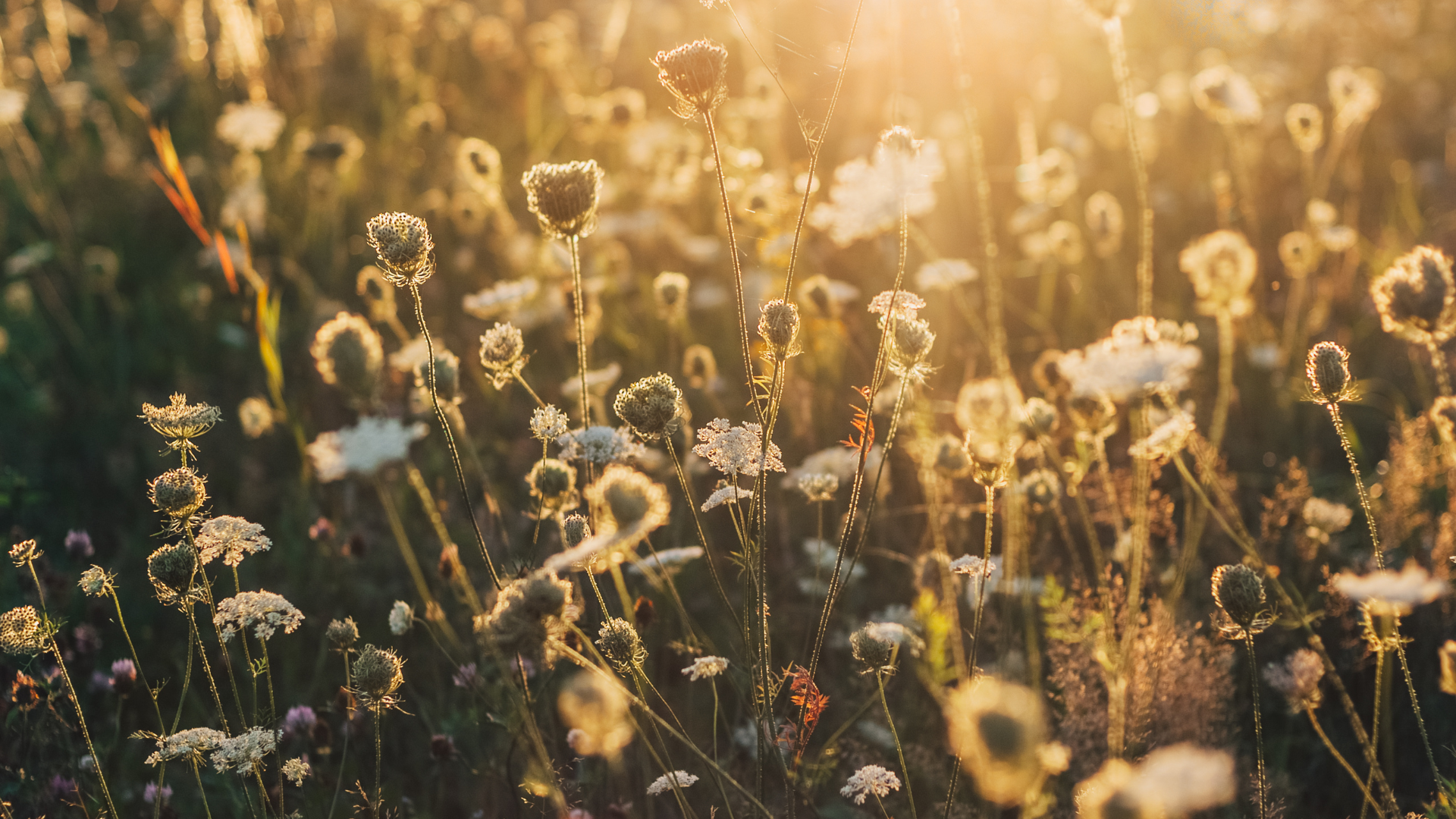
Leaving selected seed heads and stems standing can extend the garden’s visual interest well into winter. Grasses catch frost and snow, coneflower seed heads provide food for birds, and hollow stems can offer shelter for overwintering insects. What looks like garden clutter to us can be valuable habitat to something considerably smaller.
That doesn’t mean you should leave absolutely everything standing. Remove plants with significant disease problems, diseased foliage, or other issues that could create trouble next season. Otherwise, consider taking a lighter approach and leaving healthy stems and seed heads in place until late winter or early spring.
Less Work, More Long-Term Performance
Low maintenance native plants can make gardening easier, especially when they’re planted where they naturally thrive. Match each plant to the right amount of sunlight, soil moisture, drainage, and available space, and many natives can settle in and perform reliably with surprisingly little fuss. Once established, their adaptability to local growing conditions in Glenside, PA, means less watering, fertilizing, and pruning than many plants that aren’t native to the region.
Low-maintenance doesn’t mean no maintenance, though—even the toughest plant requires some attention in a garden. Native plants still need regular watering while they establish, occasional weeding, and pruning or cleanup when necessary.
Fall is a Time to Look at the Garden Differently
Take a walk through your garden in September or October and pay attention to what happens after summer’s big show ends. Fall exposes the gaps in a planting design, making it easier to identify where a shrub, grass, perennial, or groundcover could strengthen the landscape.
Fall is also a useful reminder that gardens aren’t meant to look identical from May through November. Seasonal change is part of the appeal. A thoughtfully designed garden welcomes each transition, ensuring that as one feature fades, another comes forward to capture your attention. Native grasses and perennials can complement fall container plants by carrying the same rich textures and seasonal color from your porch or patio into the surrounding garden.
Gardening for Life Beyond the Garden
A beautiful garden doesn’t have to end when the last summer flower disappears, and it can offer something much larger than seasonal beauty. Pennsylvania native plants contribute to the complexity, biodiversity, and vibrancy of life around us, providing habitat and resources while becoming part of the larger ecological fabric of our neighborhoods, region, and wider Earth. Visit Primex Garden Center to explore native plants and get help to choose varieties suited to your garden and long-term goals!