Planting Garlic Now for Next Summer’s Harvest
October 4, 2026
Fall is the time for planting garlic. For Pennsylvania gardeners, planting garlic in fall gives healthy cloves time to establish roots before winter and sets the stage for strong spring growth and a flavorful summer harvest. It may seem like an odd time for planting vegetables, but like other bulbs, garlic benefits from a winter underground before springing into growth next year. To help you have garlic success, we’ll cover how, when, and what kind of garlic to plant—plus what to expect when your harvest finally comes!
Why Garlic Gets Planted in Fall
Garlic benefits from going into the ground before winter because the cloves have time to establish a strong root system while the soil is still workable. Once cold weather arrives, that winter chill helps the plant move through the development process that leads to bulb formation later on. When spring returns, green shoots emerge and garlic gets busy building the bulb beneath the soil, so gardeners can enjoy an early start without having to hover over the bed every day.
 Choosing Garlic for Your Garden
 Choosing Garlic for Your Garden
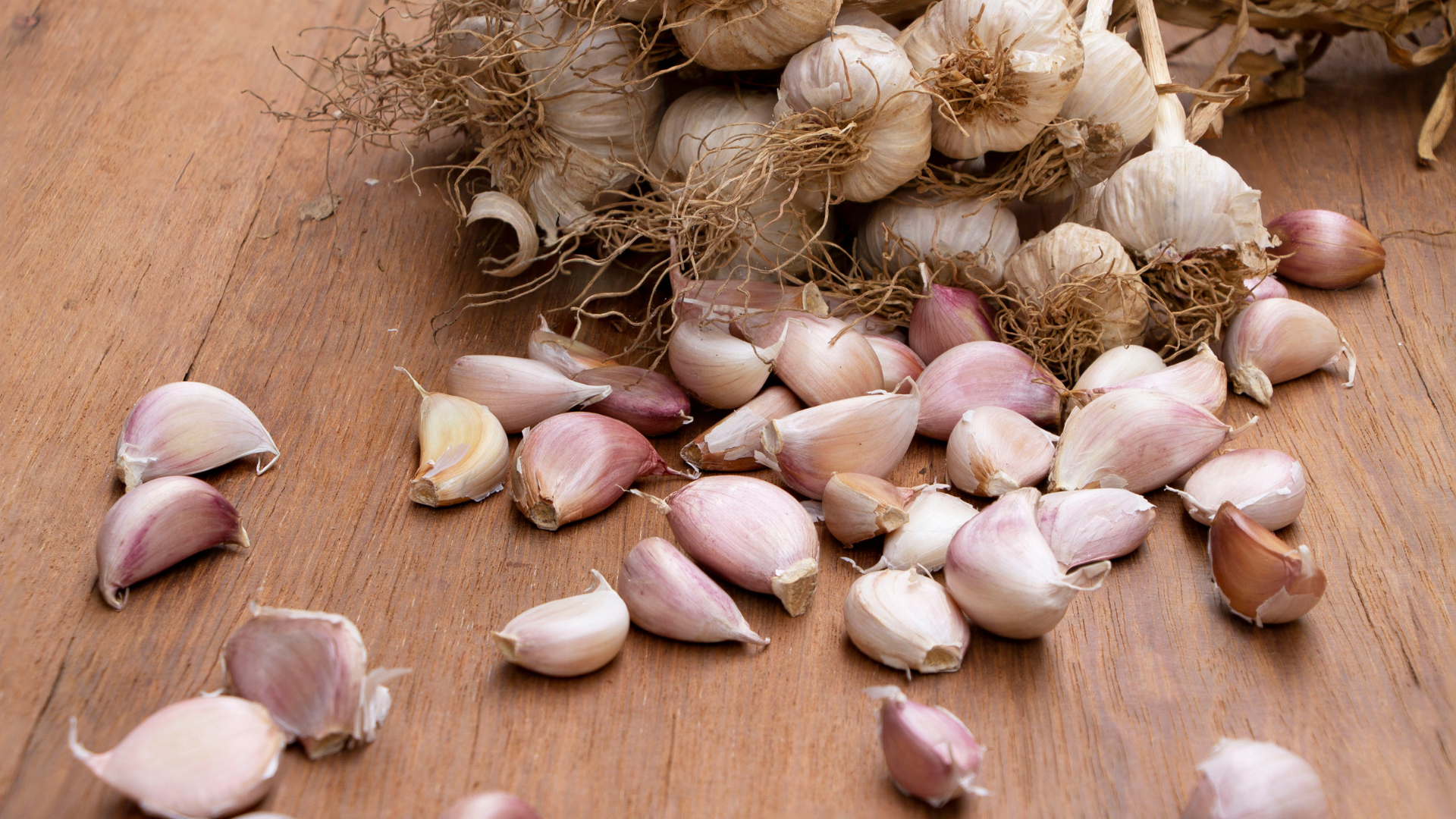
For beginners, the biggest choice is between hardneck and softneck garlic, and both have something to offer. Hardneck types generally produce larger, easier-to-peel cloves and have bold flavor, while softnecks produce more cloves per bulb and usually store for a longer period. Your choice can come down to whether you prioritize big cloves, strong flavor, long storage, or the bonus crop of garlic scapes.
- Hardneck: Hardneck garlic is well-suited to gardeners who enjoy robust flavor and larger cloves, and it produces a central flowering stalk called a scape that can be harvested in late spring or early summer.
- Softneck: Softneck garlic typically produces more cloves in each bulb and is known for excellent storage, making it a practical choice if you want garlic to last well into the colder months.
- Clove Size: Hardneck varieties often have fewer, larger cloves that are especially convenient for cooking, while softneck bulbs may contain a larger number of smaller cloves.
- Flavor: Garlic flavor varies by variety, but hardneck types are often appreciated for their rich, complex taste, while softneck varieties can offer a milder, more familiar garlic flavor.
- Storage: Softneck garlic generally has the advantage for long-term storage, while hardneck garlic is often best enjoyed sooner after curing.
- Garlic Scapes: If you choose hardneck garlic, expect curly green scapes in spring. Harvest them while tender, and you’ll get a tasty bonus for pestos, sautés, and other dishes.
Finding the Right Spot for Your Garlic
For successful growth and harvest next year, garlic bulbs need a home with sunlight, drainage, and room to bulge. It can slide neatly into an existing vegetable plot or make excellent use of newly opened space in a raised bed after summer crops have been cleared away.
- Sun: Choose a location that receives plenty of direct sunlight, ideally around six or more hours each day.
- Drainage: Well-draining soil is essential because soggy ground can encourage rot and leave garlic struggling to thrive.
- Soil: Garlic prefers fertile, loose soil that allows roots and developing bulbs to expand without fighting through compacted ground.
- Growing Space: Give each clove enough room to form a full bulb rather than packing the bed too tightly.
- Garden Placement: Make use of garden space that might otherwise sit empty through winter. Garlic can be a useful companion plant in the garden. Consider planning ahead for future crops that will need protection.
How to Plant Garlic in Fall
 How to Plant Garlic in Fall
Learning how to plant garlic in fall is easier than it sounds, and the process is straightforward for first-time growers.
- Prepare the soil. Clear away spent plants, weeds, and debris, then loosen the soil several inches deep. Work in finished compost or another appropriate soil amendment if the soil needs more organic matter and fertility.
- Separate the bulb. Just before planting, gently break the garlic bulb into individual cloves. Keep the papery covering intact because it helps protect each clove as it settles into the soil.
- Choose healthy cloves. Select firm, healthy cloves without soft spots, mold, damage, or signs of disease. Larger cloves generally have more energy available to establish strong plants.
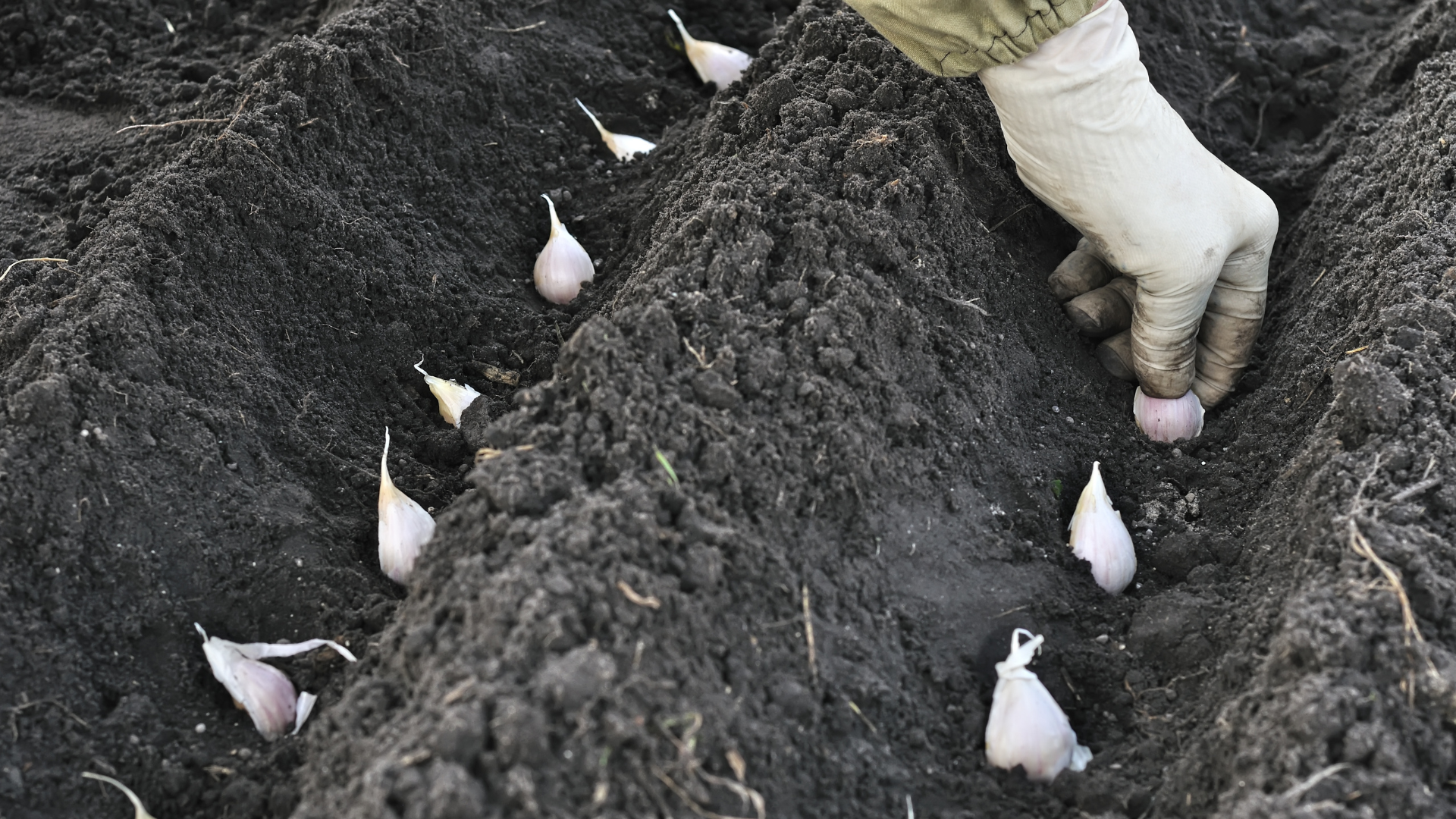
- Plant at the right depth. Place each clove about two to three inches deep, depending on soil conditions and local recommendations. The clove should be comfortably covered without being buried so deeply that spring growth struggles to emerge.
- Space the cloves. Leave roughly four to six inches between cloves, with about a foot between rows when possible. This gives bulbs room to swell and makes later weeding easier.
- Point them up. Set each clove with its pointed end facing upward and its flatter root end facing downward. Garlic has a clear sense of direction, and this simple step helps the emerging shoot grow upward naturally.
- Water thoroughly. Give the newly planted bed a good watering to settle the soil around the cloves. After that, keep an eye on moisture, but avoid turning the bed soggy.
Tucking Your Garlic in for Winter
 Tucking Your Garlic in for Winter
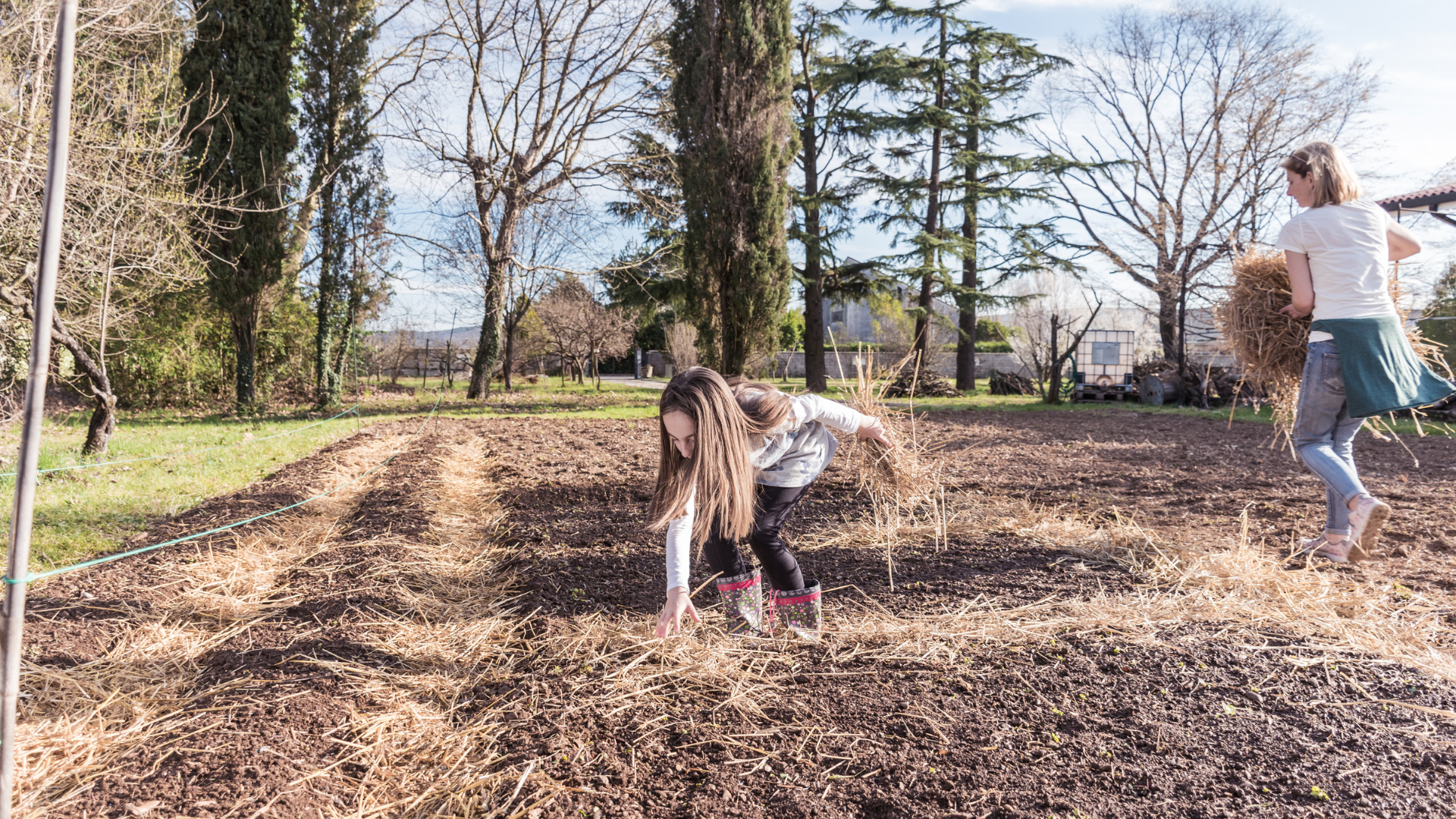
After planting, add a layer of mulch over the bed to give your garlic a cozy buffer against winter weather and prevent weed growth. Straw is a popular choice because it helps moderate soil temperatures, protects the cloves from repeated freezing and thawing, and reduces soil erosion while winter winds and precipitation do their thing.
Companion Planting with Garlic
Planting garlic in a ring around roses, fruit trees, berry bushes, and vegetable crops can add a useful layer of protection while making the most of garden space. Its strong aroma may help discourage certain pests, like mice and voles, making garlic a particularly useful companion for root crops and young trees.
What Happens When Spring Arrives?
 What Happens When Spring Arrives?
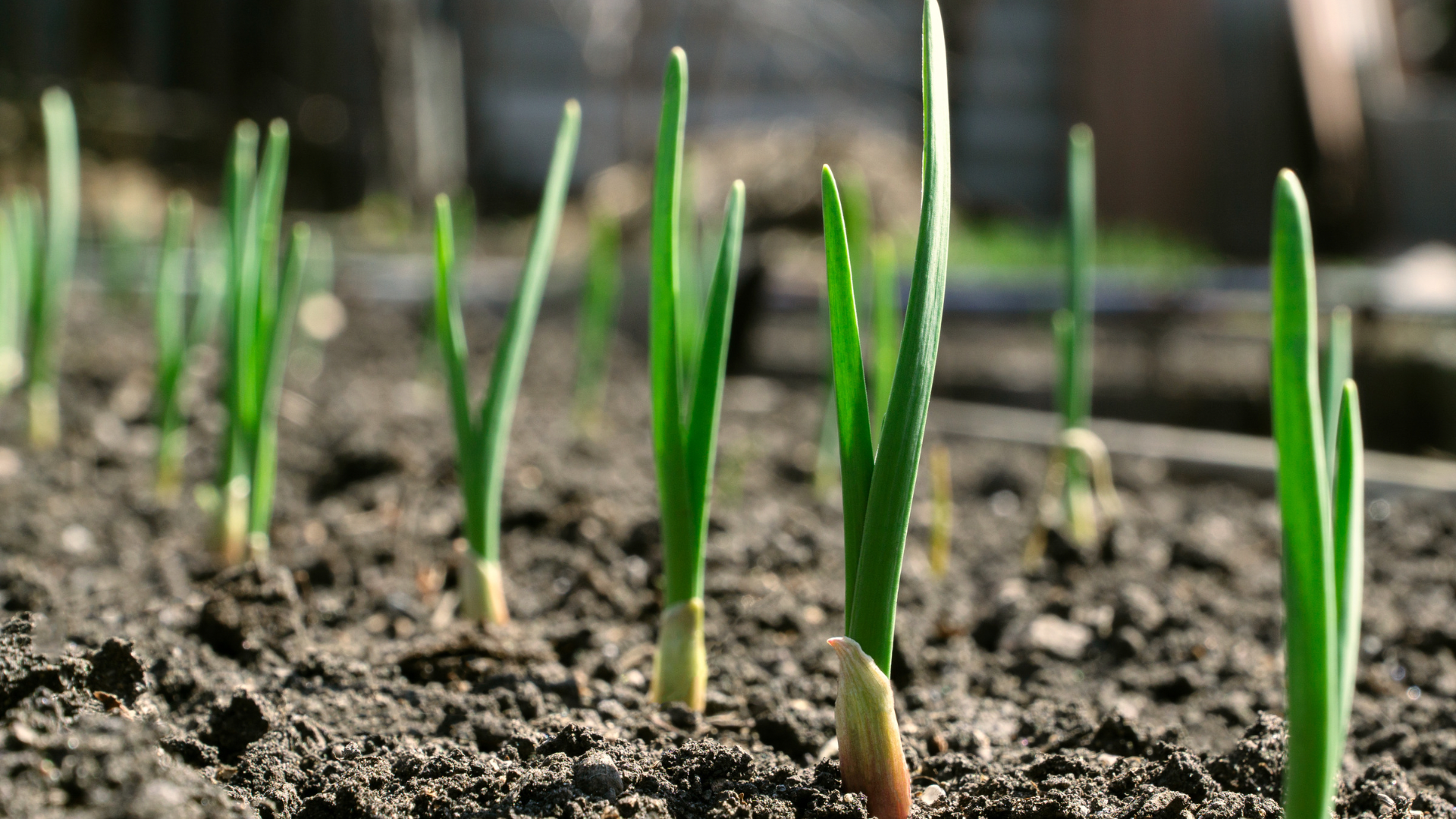
When temperatures rise, green garlic shoots will push through the mulch, which is your signal that the next stage of growth has begun. Keep the plants watered during dry spells, feed them appropriately if your soil or fertilizer plan calls for it, and stay ahead of weeds so garlic does not have to compete for water and nutrients. Hardneck growers should also watch for garlic scapes, which appear as curling stalks and can be harvested while tender, but otherwise garlic is refreshingly low-maintenance once established.
From a Single Clove to a Summer Harvest
As summer approaches, your garlic will begin showing signs that the bulbs are nearing maturity. Look for one key sign: three or four of the lower leaves turn yellow or brown while several upper leaves remain green. This indicates that the plant is ready for harvest. When the appropriate number of leaves has changed color for your variety, gently loosen the soil and lift the bulbs rather than pulling aggressively on the foliage.
How to Cure Garlic
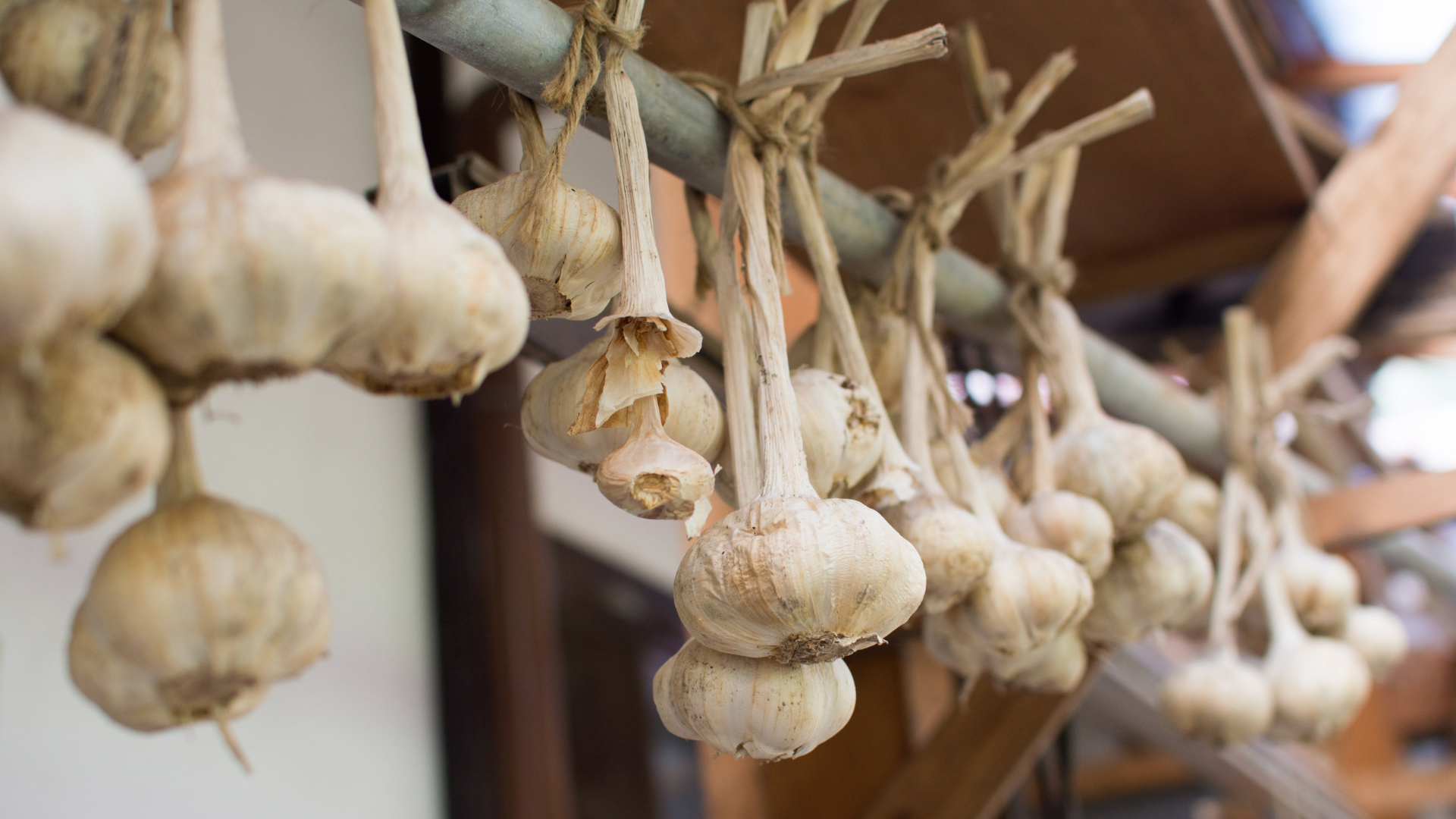 How to Cure Garlic
Freshly harvested garlic is not quite ready for the kitchen cupboard because it needs time to cure. Brush off loose soil without washing the bulbs, then hang or lay them in a dry, well-ventilated, shaded location for several weeks until the outer skins become papery and the necks are dry. Once cured, trim the roots and foliage as appropriate for the variety, and store the bulbs in a cool, dry place with good air circulation so you can enjoy your harvest for months.
Plant in the Fall, Enjoy in the Summer
Garlic rewards patience: plant healthy cloves in good soil, protect them through winter, and allow them to grow naturally through spring and summer. For Pennsylvania gardeners, planting garlic in fall gives the roots time to establish before winter, setting the bulbs up for strong spring growth and a flavorful summer harvest. For gardeners interested in planting garlic in Glenside, PA, fall is the perfect time to make use of garden space that summer crops have left behind, including raised beds. Stop by Primex Garden Center for everything you need for planting garlic in fall, including soil amendments and mulch, and get expert guidance on preparing your fall vegetable beds for next summer’s harvest.