How to Choose the Best Hydrangea
May 10, 2023
Get happy with hydrangeas and find your perfect match!
Hydrangeas are world-famous shrubs cherished for their massive, long-lasting flowers that bloom all summer and often change colors. Like roses, there are many types of hydrangeas, each with a unique style and personality. This guide breaks down the four prominent families of hydrangeas and what makes each one special!
What are the Main Types of Hydrangeas in Pennsylvania?

1) Bigleaf Hydrangeas
(French Hydrangeas, Hydrangea macrophylla)
When you think of a hydrangea, you probably first think of a Bigleaf Hydrangea. These are the most popular hydrangea in the garden. Native to Japan, they’re defined by a rounded habit, spherical flower clusters, and—you guessed it—big leaves. They could have white, pink, purple, or blue petals, depending on the variety. If you’re ever confused about hydrangeas types, remember that the flowers that look like cotton candy are Bigleafs!
Among the Bigleaf Hydrangea species, there are two common varieties, the Mophead and Lacecap:
- Mophead: Mophead Hydrangeas fit most of the descriptions listed above. When distinguishing them from Lacecaps, remember one main difference: the Mophead flowers are mostly sterile. That means they can’t be pollinated, which makes them continue to bloom all summer and fall. When autumn does come, some change color from white to blue, red, or pink. Others are colored throughout the whole summer.
- Lacecap: in contrast to Mopheads, the Lacecap Hydrangea flowers are fertile. That means, like most other flowers in your garden, they open and close. The result is a beautiful flower cluster with closed buds in the middle, surrounded by open flowers. Like Mopheads, you’ll find varieties with white, pink, red, or blue petals.

2) Panicle Hydrangeas
(Hydrangea paniculata)
For those new to gardening and wondering what a panicle is, Webster’s dictionary summarizes it beautifully as a “pyramidal loosely branched flower cluster.” The key word to remember is pyramidal, which is precisely what defines the Panicle Hydrangea. In short, their flower clusters are shaped like pyramids or cones. In addition, they’re famous for being one of the most forgiving hydrangeas to grow, tolerating variables like heat, sun, and cold more than the others.
Most Panicle Hydrangeas have white or lime green flowers that slowly change to pink or red in the autumn.

3) Smooth Hydrangeas
(Hydrangea arborescens)
This species of hydrangea is native to the Eastern United States. Like Bigleaf Hydrangeas, they have rounded flower clusters. The main difference is that Smooth Hydrangeas have even bigger flower heads and creamier-looking petals. In early summer, they open with a lime green color before changing to a bright, creamy white and fading to tan in the fall. The massive flower heads are the most defining feature of this species and the reason why many gardeners opt to plant Smooth Hydrangeas.
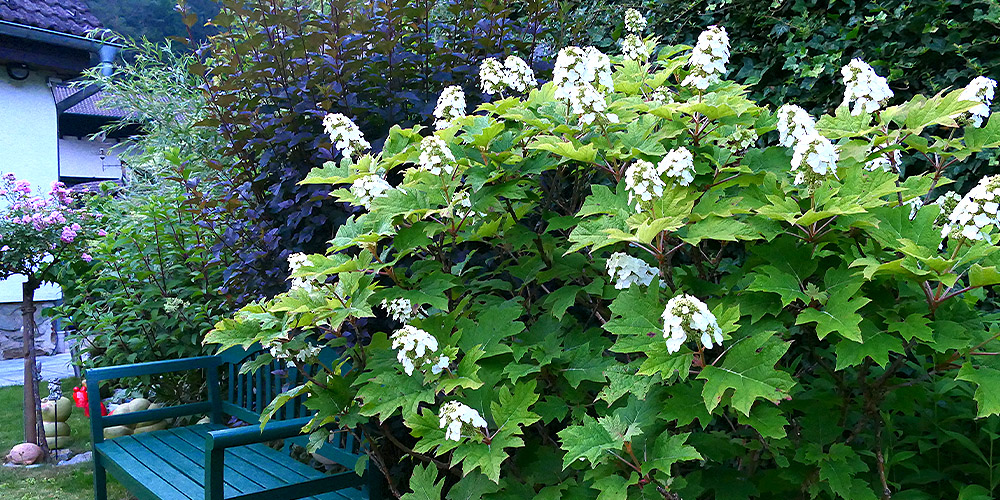
4) Oakleaf Hydrangeas
(Hydrangea quercifolia)
Oakleaf Hydrangeas are another native of the Eastern United States. They feature white panicles of flowers and their characteristic oak-like leaves. Of all the hydrangeas, their unique leaves give them a wild, “natural” look, but that doesn’t mean the flowers are any less impressive. The flowers emerge white and slowly transition to pink as the seasons change. The leaves turn an impressive purple, bronze, or red in the fall.
Frequently Asked Questions About Hydrangeas in Pennsylvania
Are There 2 Types of Hydrangeas?
No, there are many more than two types of hydrangeas. There are four common species of hydrangeas—the Bigleaf, Panicle, Smooth, and Oakleaf—as outlined above, plus many varieties and subspecies among these!
What is the Most Popular Hydrangea?
Mophead hydrangeas are the most popular kind of hydrangea. They are stunning shrubs with classic, rounded flower heads and wide varieties of blue, pink, or purple petals. But that doesn’t mean they’re the only option. With the guide above, you can learn more about each species and choose the best one for your garden.
What Do Hydrangeas Symbolize?
The word hydrangea comes from the Greek words “hydra” and “angeion,” which mean water vessel. This refers to their cup-shaped seeds resembling an ancient water jug and their love of moisture. As for symbolism, some people say hydrangeas evoke a sense of grace, gratitude, or harmony, but that depends on your interpretation.
How Do I Choose the Right Hydrangea?
The choice depends on your preferences and the location you’d like to grow it. Many hydrangeas thrive with morning sun and afternoon shade, but that varies depending upon the variety. For example, panicle hydrangeas usually tolerate full sun more than others.
If you still need help picking the perfect hydrangea for your Pennsylvania garden, stop by the garden center today and explore some of the best options on the market. We hope to see you soon!