Add Some Funk to Your Collection with Air Plants
April 17, 2023
Think outside the pot with these no-soil houseplants!
In grade school, we all learned that plants need soil, water, air, and sunlight to survive, but air plants are an exception. This tree-growing species from the tropics doesn’t need soil at all. Free spirits of the plant world, they grow happily outside of a pot as long as you give them the proper care. Here’s how and why to include these funky houseplants in your collection!

The Story of Air Plants
Like tropical orchids, air plants, or Tillandsia, are epiphytes, meaning they grow on the branches of trees, other plants, rocks, and logs. Even freer than orchids, they don’t need a growing medium but absorb nutrients through trichomes from rain, dew, dust in the air, and decaying organic matter.
Coming from the bromeliad family, they feature upward shoots of leaves, which may be straight, wavy, flexible, or rigid, depending on the species. They only bloom once in their life, offering vibrant red and violet flowers that transport you to the rainforest. But don’t worry; they produce small “pups,” which you can divide and grow into new plants to keep the cycle going!
What Do Air Plants Need to Survive?
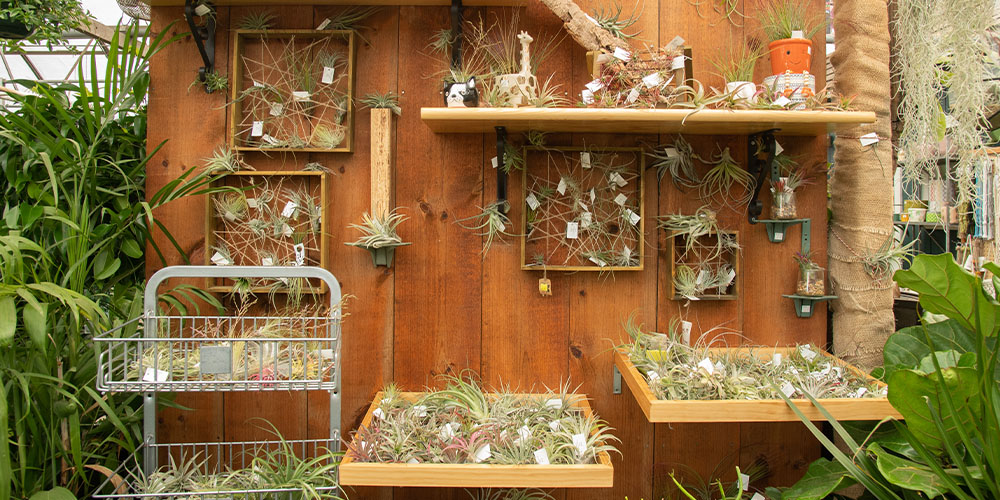
Unlike other houseplants, air plants don’t need a pot of soil to thrive, and placing them in the soil makes them rot! Instead, set them up on a piece of wood, some slate, a shallow bowl, a saucer, wire, macrame, or a glass terrarium—as long as it has enough airflow. They will naturally anchor themselves to the surface, but you can clip off the anchors without harming them if you don’t want them to. Besides that, they do need specific care for water and sunlight.
How to Care for Air Plants in Pennsylvania
- Water Care For Unmounted Air Plants: watering your air plants correctly is essential to keeping them healthy and happy. If they’re not anchored, you can soak them in room temperature water every 1-2 weeks. After a 5-10 minute swim, let them dry off on a towel before returning them to their spot. Three hours after soaking, the plant should be dry again to prevent its roots from rotting. In addition to soaking air plants, you’ll need to mist them about once weekly to keep them hydrated.
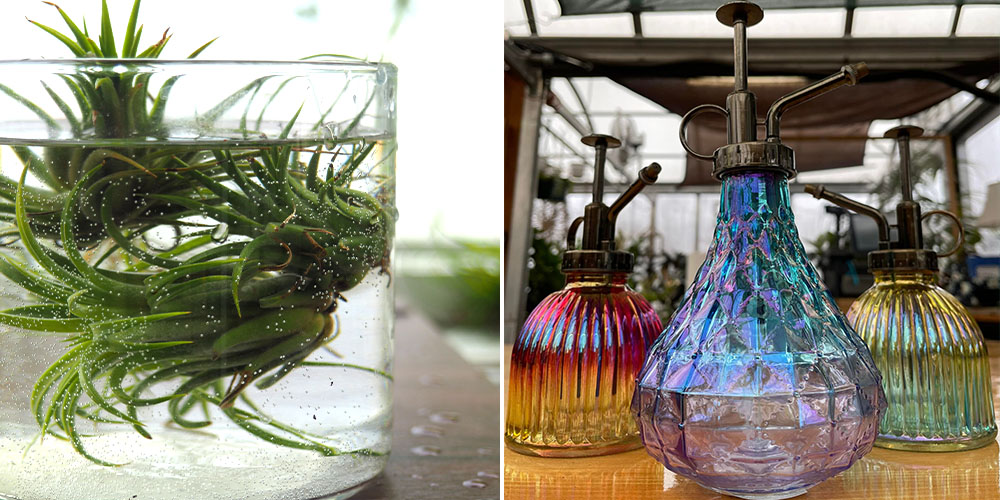
- Water Care for Mounted Air Plants: if your plants are anchored, you will have to rely on misting alone to keep them happy. Mist them completely once or twice a week so they are thoroughly saturated but not dripping with excess moisture. Signs of underwatering include brown or crispy tips. Be careful not to overwater as that can quickly rot your precious air plant.
Pro Tip: Remember to water air plants in the morning. Watering them in the evening disrupts their ability to respire during the night.
Do Air Plants Need Sunlight?
Yes, air plants need bright, indirect sunlight to thrive. Keep them close to a west, south, or east-facing window, but not in view of direct rays. Remember that they’ll need more watering in a hot and dry location.

How to Propagate Air Plant Pups
Air plants put all their energy towards one magnificent bloom of their lifetime. But soon after, they produce babies that you can propagate to keep the cycle going. At first, these new “pups” need a connection with their mother for nutrients. Once they’re 1/3 to 1/2 of the size of the parent plant, they’re ready to strike off on their own.
To separate them, hold the mother and twist the pup away downward. They should pull apart quite easily. Once separated, care for your new air plant until it blooms and repeats the cycle. Keep in mind that separating the pups is not totally necessary. You can keep them together for a more collective look.
More Care Tips for Air Plants in Pennsylvania
- They need more watering in the hot summer and autumn months and less moisture during winter and spring.
- Most species thrive in temperatures of 70 – 85 degrees, so keeping them away from cold and hot drafts is best.
- Growing them in a humid place like a bathroom or kitchen is a bonus.
Air plants are funky, unique, and beautiful houseplants that are easy to care for. Their soil-free nature lets you create fascinating arrangements. Try growing them on a wire, in sea shells, on rocks, driftwood, or whatever you can imagine. They look like a garden of coral reefs right in your home when placed together.
For more tips on air plant care in Glenside, PA, and to see our collection in person, visit our family-operated garden center today!