Pitcher Plants

Sarracenia Hybrids

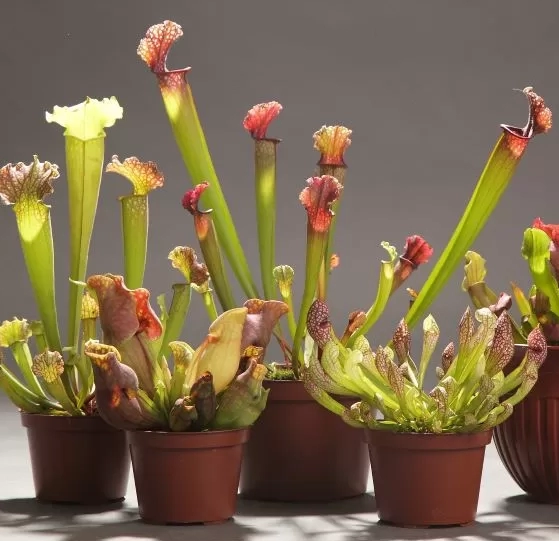
Sarracenia, or North American pitcher plants, are native throughout the east coast, from northern Florida through the New England states and the eastern provinces of Canada. These plants get their name from their pitcher-shaped leaves. They capture insects by producing nectar along the rim of their pitchers. When an insect starts to lick up the nectar, it tries to get more by reaching in the pitcher. When it loses its footing, it falls straight in!

The inside walls of the pitcher are very smooth, so insects are not able to crawl out. They also can’t fly out because there isn’t any airlift! Eventually the insect dies from heat exhaustion or dehydration. As the insect decomposes, the plant absorbs its nutrients right through its leaves. Mmm….

LIGHT

Content divider

During the growing season, Pitcher plants need full sun. (At least 4-6 hours of direct sun for optimum growth).

WATER

Content divider

Keep the pot in standing water at all times. Never allow the soil to dry out completely. Most pitcher plants tolerate moderately hard water. However, you will need to top water regularly and change the soil yearly to prevent excessive mineral buildup.

Whenever possible, use mineral free water for best results. If you grow your plant in a pond or fountain, keep the water level no higher than halfway up the pot. Avoid drowning the crown of the plant.

FERTILIZER

Content divider

It is not necessary to fertilize because carnivorous plants have adapted to capturing insects on their own, and insects will naturally be attracted to your plant.

TIP:

Content divider

Sarracenia requires nutrient-free soil that provides good drainage and aeration. Use a standard soil mixture of 1 part peat moss and 1 part perlite. Never use potting soil, compost or fertilizer. These ingredients will kill your plant.