Poinsettia Plant

Euphorbiaceae Pulcherrima

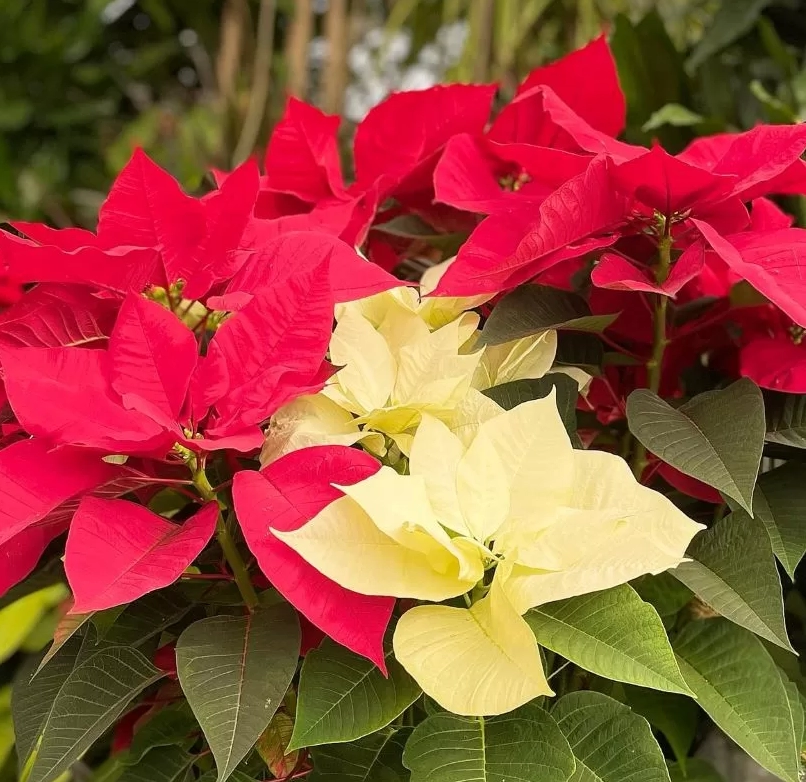
A Poinsettia Plant, native to Mexico, is the most popular indoor flowering plant sold in the U.S. The colorful parts of the plant are really modified leaves called bracts. These bracts are the flower’s petals of the plant and they are quite attractive, but they are not part of the flower. The real flowers are quite insignificant and are located inside the small yellow part of the Poinsettia called a cyathia.

This wonderful holiday plant comes in many colors and not just in the popular red. There are white, pink, burgundy, salmon, yellow, orange, purple, blue and marble variations.

*Poinsettias, despite all rumors, are not poisonous, although the milky sap of the plant may cause minor skin irritations.

LIGHT

Content divider

Poinsettia Plants need very bright, indirect light, but no direct sun. If you place your Poinsettia close to a window, be sure none of the leaves touch the glass or the cold will damage them.

FERTILIZING

Content divider

Only fertilize a Poinsettia plant in the Spring and Summer after the plant has finished blooming.

WATER

Content divider

Poinsettia plants are members of the Euphorbia family and should not be over- watered. Always allow the top 50% of the soil to dry out before watering to prevent root rot. Overwatering will cause the green leaves to fall off, leaving bare stems topped by a few colorful bracts. Severe underwatering will result in both the green and colored leaves to drop off. Be careful not to get the leaves of a Poinsettia wet when watering because the water will cause unsightly white marks on Poinsettia leaves.