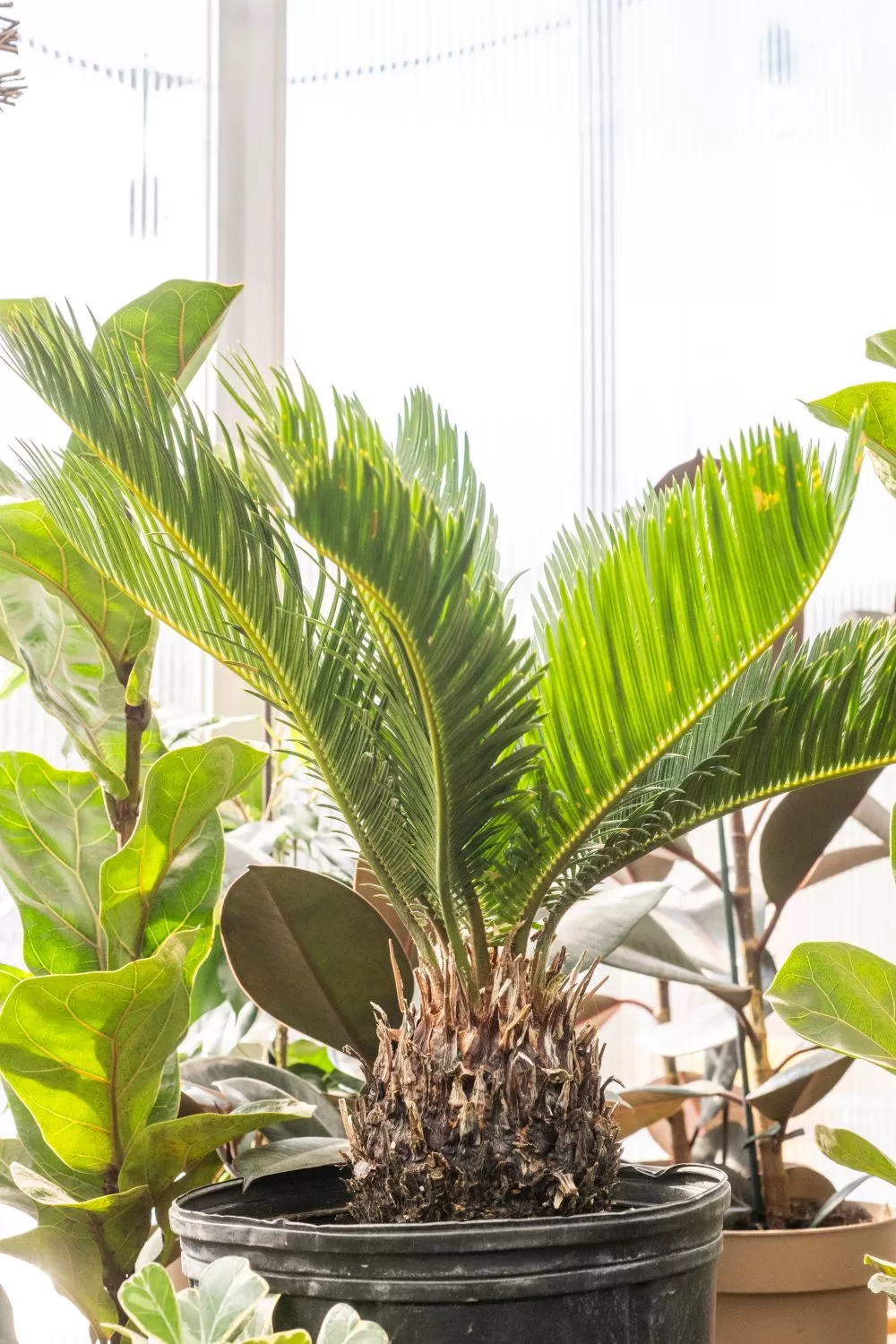
A Sago Palm is not really a Palm but a member of the Cycad Family. Sago Palms are one of the oldest and most primitive plant families that has not changed very much in the last 200 million years. It has a very rugged trunk 1”–12” in width and is topped with stiff narrow arching fronds that grow in a circular pattern. Indoors this plant can reach a height of 10ft and 3ft wide. These plants are poisonous and should be kept away from pets and children.
Sago Palm
Cycas Revoluta
LIGHT

A Sago Palm needs bright light with a little direct sun in the morning. Turn the Sago Palm ¼ each week to keep it from growing toward the light.
WATER
Allow half of the soil to dries out before giving the plant a good drench. Water sparing in the Fall and Winter when the light is less and the temperatures cool off. This is the time of year that the Sago Palm will go into its dormancy period. Rainwater is the best, but if tap water is your only option, be sure to allow it to stand for at least 24 hours to eliminate the high levels of fluoride. Underwatering will cause the leaves to pale or yellow. Over-watering will cause root rot, yellowing leaves and a mushy stem. NEVER get water in the crown of Sago Palm because this can cause “crown rot” and evenly the plant will die.
FERTILIZING
Fertilize your palm with a water-soluble plant food (18-6-18). Mix one teaspoon of fertilizer into a gallon of water for proper dilution during the growing season. Start in the Spring when new growth appears and stop fertilizing in the Fall. NEVER in the winter.
TIPS
- Sago Palms prefer high humidity.
- Keep away from heating and air conditioner vents.
- Keep out of high traffic areas because their leaves are fragile.
- Never allow them to sit in water.
- Sago Palms are very poisonous.